What I'm Working On


So I've embarked on a new series which I'm tentatively calling The Westside Saga. Westside is a hyper-realistic post-apocalyptic drama (sorry, no zombies) that takes place in a third-world United States after an economical collapse. The first book (due out in the Spring of 2015) follows siblings Cora and Danny Green as they search for the truth about their missing father. It's a journey piece and will introduce you to some (hopefully) unforgettable characters.


Unlike the Lamp Series, which takes place in a dystopian present and contains supernatural elements and essentially seeks to scare the crap out of you, Westside is set far into the future and the world in which the story takes place does not contain magic. Reading this book will be like visiting an alien planet for the first time only to realize you've been there before. It's going to be a fun new world to explore.  


Falling Embers Update

I know that some of my six fans have been (im)patiently waiting for news on the Falling Embers release. The good news is, there are only three chapters left to write and then it's off to the editors. The books typically go through a few rounds of editing (one beta, a copy-edit and several proofreads) before it's fit for release to the general  public. So while I don't have a firm date right now, Falling Embers should be available in late July on Amazon, Barnes & Noble, Kobo, iBooks and a few other places.

Also related to the Lamp Series, I'm going to be unveiling some new artwork for the release of the 800-page omnibus edition (hopefully due out sometime in August). We are commissioning an artist to do anime-style character drawings that will be included in that edition. I'm also toying with the idea of doing a unique comic book related to the series (but only if there's enough interest, because that's a crazy amount of work to pull off). Feel free to e-mail me if you have any interest in seeing that project come to life.   

The Lamp Interview and Review

The following interview with U.K. book reviewer, Victoria Mildenhall, took place a while ago but I left for the Philippines shortly after it was conducted and never got around to posting it here at the blog. The interview begins with her review of the first book in the Lamp series. We talked about a few different subjects, but I'm just posting the relevant parts here. Hope you enjoy.

The Lamp: Review and Interview with the Author

Browsing on a particular website for something new to read, I came across a Supernatural Thriller among the usual free ebooks that are quite rubbish (See previous article Fifty Shades, the Aftermath).  I had already asked for my money back on a number of self-published books, less to do with the content, and far more to do with the incredibly poor quality.  Spelling mistakes, grammatical errors, sections missing are only some of the ways which mar a reading experience, and some are so bad it is actually impossible to read them at all.

However, I digress.  I downloaded the Lamp by Jason Cunningham and can honestly say that I was utterly astounded, partly because it did not contain the irritating errors that I mention above  but mostly because it was so compelling.  It is one of those rare books that you do not want to put down, even when your eyes are closing by themselves and you know that you will need to get out of bed in about three hours.  The primary reason I enjoyed it so much was that there was no telling what would happen next.  Unpredictable and understated, the characters as well as the story were compelling and easy to connect with. 

My only gripe was the ending.  I nearly screamed when it ended and I was left with questions, which is why I left a review on the site that I had downloaded it from, and did grump a bit about the ending.  The author very kindly pointed out that there are sequels to come which has left me very relieved.  Briefly, the story revolves around a man who comes out of prison and returns to his old house to find a lamp left for him that has special powers, although he does not know who has sent it to him.  Underlying the story is a question of trust, and whether or not he can trust the sender, who also leaves him messages. 

I would really recommend reading this book, not too short and not too long, it is very entertaining and whilst the story will have you gripped, the social problems that underpin the storyline are equally as fascinating.  I enjoyed it so much that I contacted the author and asked a few questions, which he very kindly answered.  They provide an backdrop to the Lamp, and offer some useful insight as well as a message to you all....  Enjoy and thanks to Jason Cunningham for his time! 


Q: What was the inspiration for your book, "The Lamp"?

A: I told my editor that I wanted to write a story about trust. Can you trust someone you've never met? If so, to what extreme? The philisophical implications are obvious, and as someone who's always found it hard to trust people, I wanted to tackle this subject matter honestly. The hero, Levi, is a guy with a rough past who is granted an incredible favor from someone he's never met. But he's not sure if this makes him liberated or enslaved. In a sense, the answer is "both."
When Levi realizes his life is in jeopardy, he has no choice. If he doesn't trust this mysterious friend, he'll be dead in short order. But that doesn't make it easy. The idea of a guy who is burdoned with carrying this lamp that heals sick people came from my good friend, Tom Safford. That's as far as we went with the idea and then I put it away for a while. But the characters sort of found me and dragged me back, letting me know there was a story to tell here. So although the premise and the theme were interesting to me, I'll always be a character guy at heart.

Q: Would it be possible to get an idea of what readers can expect from the sequels?

A: Yes! I'm keeping the same cast of characters, although Violet will have a more predominant role in the second book. I'm also introducing a few new characters to fill in the world. Not to give away any spoilers but there is also a new villian, much in the vein of Dev from the first book, but more terrifying. Actually, the second and final books will be quite a bit scarier than the first installment because the stakes are much higher and not everyone will make it. That's all I'm saying.

Q: There is an article on your blog entitled 'Adventureland' which offered an insight into the personal philosophy of you and your wife. Do you think that your philosophies on life influence your writing or do you prefer to stick to fanstasy alone?

A: I don't know how writers can seperate the two. Life and art are too infused with one another. Our lives are enriched by art, and art is kept honest by reality. My first book "The Island of Ted" tackles the idea of the American Dream and escaping the rat race, as well as the importance of relationships. Some might even think it's a bit heavy handed, which it might be. It was my first book, after all, and I'm still learning how to balance that.
No one wants to be lectured to when they're just looking for a relaxing read. The Lamp tackles some of my own weaknesses like trust and courage, and I wanted to throw every temptation at Levi that we all face on a daily basis to see how he reacts. A long time ago I heard a great truism about what makes for a good story: Give your hero the biggest challenge you can throw at him... then make it worse.

Q: When you re-read a book once you have finished it, what are the important characteristics for you? (for example, strong characters, lots of dialogue, being able to picture the story etc.).

I have to care about the characters, what happens to them. It's visceral. When I'm reading back over a story, I want to be sucked into the world and lose myself in it. Whether or not I learn some life lesson is secondary. So if I don't feel emotionally stirred up or compelled to care about the main characters, the story needs to be reworked. Story is important, but for me plot is always second to that emotional connection with the characters. Something I hate, and try desperately to weed out of my writing, is overly descriptive passages or what's called "purple prose." That's gotta go.

Q: Based on the above question, do you feel that your favourite authors have influenced or inspired the way that you write and in what way?

A: My first reaction is to say no, but I think influence does probably seep in unconsciously. Most of the writers I respect and admire don't write in a style that's similar to mine. The closest is probably author Hugh Howey, because he tends to use strong themes and also writes lean. But I also think Hugh is a better writer than me, even though he's my closest style match. I read more non-fiction than fiction so there are always threads of reality to my work. Real people and situations inspire my imagination more fully than well crafted fiction, although they both do the job.

Q: Is there any message that you would like to offer to the readers of this article, whether they have read your books or not?

A: I suppose not, since any message I might give would only sound like common sense to most folks. Read C.S. Lewis. Read lots of non-fiction and never be afraid to let it change your opinion about something. And when you're finished reading all the good books out there, maybe throw mine into the pile somewhere, if only for kindling.

Some News


To raise money for my son Andrew's adoption expenses (and to finally bring him home from the Philippines) I will be selling autographed copies of my books. There's a new tab at the top of the screen that will take you to that page, or you can click here. All proceeds from these book sales will go toward paying our adoption expenses and will be added to our total funds on Andrew's GoFundMe page.

As many of you know, I hold a full time job in the healthcare industry and write novels when time allows (and even when it doesn't). And while it's nice to get a royalty check every month that can cover a few bills, the reason I write is because there are readers. Last year, I gave away around 50,000 copies of my books for free on Amazon. That may not be fiscally responsible, but as long as folks are reading, I will continue writing. That's what matters to me. After all, I earn far more money at my day job than I do as a scribe. If it wasn't for my readers (some of whom are quite vocal!) I wouldn't be able to pursue this journey at all.

Don't let anyone tell you otherwise: You matter.

Arming the Green Giant (Guest Post)

The article below is a guest post, written by a good friend of mine who is a certified nutritionist as well as a talented documentary filmmaker. We go way back, and Brent knows his stuff when it comes to nutrition, so he'll be doing regular guest posts here to enlighten us on bettering our health. Take it away, Brent...


Arming the Green Giant
The Old World Brings Healing to the New World
By Brent Leung, C.N.

As cancer spreads like a wildfire through society with brute force and destruction, arming ourselves with the best defensive and offensive nutritional weapons has never been more important.
While many marvel at the virtues of modern medicine and the constant birthing of new treatment technologies, perhaps an answer to cancer lies not in the present or the future, abut in the past.

Green tea leaves have been a cherished treasure among physicians for over 4,000 years. Around 1191 AD, Eisai, a Zen priest, authored the Kissa Yojoki, (Book of Tea) describing how regular consumption of these green leaves can have a positive effect on five of our bodies’ vital organs: the heart, brain, lungs, kidneys and liver.

Before we knew of X-ray machines, stethoscopes and operating rooms, before we mapped the human genome, before DNA and the knowledge of blood types, and long before Briton hair styling barbers doubled also as medical surgeons, green tea was used to cure blotchiness, indigestion, beriberi disease, prevent fatigue, and improve urinary and brain function.


Over 800 years later, scientists are still studying the healing virtues of these ancient leaves. In 2003, researchers from the University of Rochester “discovered that chemicals in green tea shut down one of the key molecules that tobacco relies upon to cause cancer. It's a find that could help explain why people who drink green tea are less likely to develop cancer.” Researchers from the Korea Institute of Science and Technology found that green tea may slow the growth of brain cancer. Green tea has been connected to helping treat and/or prevent bladder cancer, ovarian cancer, pancreatic cancer, prostate cancer, skin cancer, stomach cancer and the list continues.

One salient feature of green tea is its ability in certain situations to not only prevent cancer cells from multiplying, but also prompting apoptosis, or cell-induced suicide in infected cells. Scientists from the University of Strathclyde made 40% of skin tumors vanish last year with green tea extracts, a more impressive achievement than David Copperfield causing the Statue of Liberty to disappear.


There’s no question that green tea in all its shapes and forms can serve as a formidable foe against cancer, but its effectiveness on the front lines of our cellular war is completely dependant on how well you choose your weapon.

Not all Teas are Created Equal
Make sure your green tea is organic. It’s antithetical to send in the green giant laced with chemical pesticides and fertilizers that themselves cause cancer.

Bag or Loose Leaf?
Green tea leaves in the bag variety are minced into dust particles prior to packaging, which in turn exposes the cancer-fighting compounds to moisture and oxygen, leading to a loss of nutrients.  

If you go with the bagged variety, know that these teas are usually encapsulated in bleached bags, containing harmful chemicals that disperse in the water. As we drink, the chemicals trek through the digestive track, eventually setting camp in our fat cells. These pernicious toxins can disrupt bodily hormone function and our reproductive systems. Like most chemicals, they can also cause or contribute to cancer.

Picking a Soldier: The Samurai (Japan) or Terracotta Warrior (China)
Prior to the Fukushima Daiichi nuclear disaster in Japan, one could freely protect their immune system with green tea originating either from the samurai or terracotta state.  Today, due to the radioactive fallout, it’s better to play it safe and source your tea exclusively from China, or other countries that produce organic varieties.


Preparation for Battle
Now that you’ve selected your giant, it’s time to arm him with shielding. The anticancer benefits in green tea that have been identified to date are catechins: polyphenols (anti-cancer co-enzymes or co-factors) that act as super antioxidants. These potent co-factors however are equally fragile and require protection.

First, ensure that you’re using filtered, reverse osmosis water. Regular tap water is adulterated with all sorts of cancer-causing chemicals and detergents. While your water is heating up, fully immerse the tea leaves with just a touch of room-temperature water. Then, squeeze in some fresh, organic lemon juice over your leaves and swirl it around.

This will act as a coating for the catechins, which are similar in structure to the polyphenols in apples.
So what commonalities do apples and the catechins in green tea share? Think about what happens to the apple when it’s sliced. There is a browning effect due to its exposure to our oxygen-laden environment. This is a visual cue that the polyphenols (antioxidants) are dying from oxidization, which in turn means the nutritional benefits are waning.

The Catch 22 for green tea is the necessity of hot water, which penetrates the leaves, thereby allowing the polyphenols to be released, but because of their sensitivity, they being to diminish in activity and loose potency quite quickly from the heat. Within 10 to 20 minutes, all the benefits will be eradicated. Adding lemon juice provides a protective shield, coating the polyphenols and preserving their structure and effectiveness, much like the application of lemon juice slows the browning of the apple.

Additionally, the deformation of the polyphenols is accelerated in a pH environment of 5.0 to 7.0. Lemons are acidic, and have a general pH of 2.0, which further aids in preventing polyphenol oxidation.

When heating your water, keep in mind that the protective lemon coating only works if your water temperature is between 160 F (71 OC) to 180 F (82OC). Boiling water will quickly destroy the polyphenol regardless of the lemon juice, leaving you with an unarmed solider and therapeutically dead tea. Boiling water also produces an increased bitter flavor, souring the serene experience.

Try to never add milk, creamer, sugar or non-dairy substitutes to your tea. Those will only decrease and/or hinder the giant’s effectiveness as he battles through a sub-cellular toxic environment, fighting the good fight for your survival, prosperity, and health.


A Wonderful Mistake


So last year, the wife and I left our jobs, sold everything and moved to the Philippines (planning on a 2-year stay to facilitate the adoption of my wife’s 4 year old nephew). We were given the impression that our employer would allow us to work remotely and still have an income during this period so we wouldn’t have to beg family members for cash once our savings ran out. Well, the employer flopped (after sending us overseas with a work laptop and voip phone) and our savings lasted about 6 weeks.

Here are some pics from our time in Boracay Island.

Coffee Shop Hustlers
Me preparing for a rain shower.


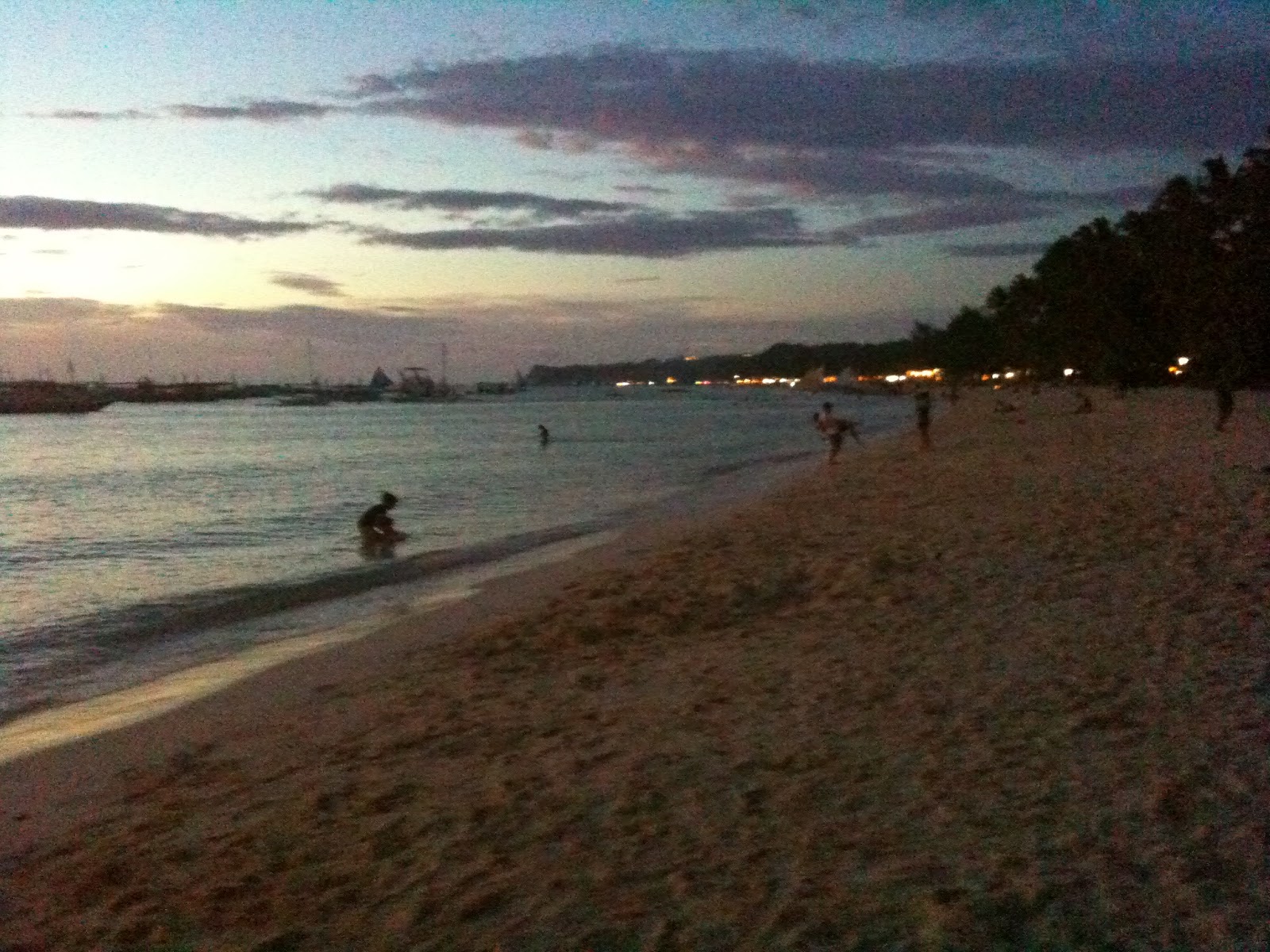
Full Moon on Boracay
Andrew Playing in the Ocean at Twilight
Right at the end of this period, I was walking to the beach at night to get food (the vendors all lined the beachfront so that's where you get your food) but I tripped over some busted cement on the makeshift alleyway road and tweaked (or broke) my foot pretty good. I couldn't walk at all for about a week, and proceeded to limp around for the remainder of our journey. 

Last Night in Boracay

Last Night in Boracay
This was where we stayed...

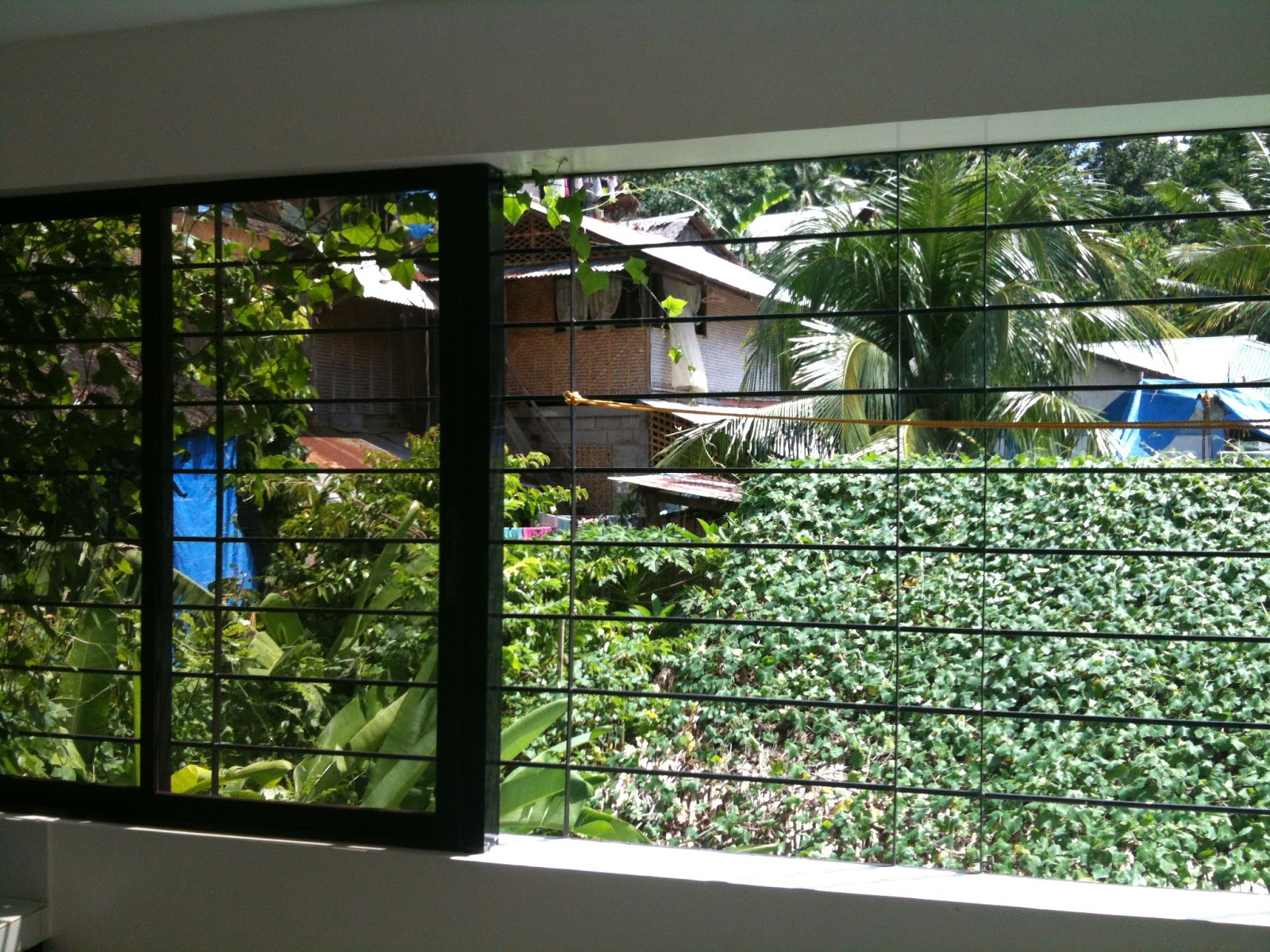
The view from our kitchen.
Our bedroom in Boracay.
Our kitchen at the Boracay apartment.

As you will know from previous blogs, the apartment we’d booked in Boracay was not available once we arrived so we moved into the only other available place to rent on the island, and it was expensive. That ate through our savings quickly, so we packed up and moved 5 hours inland, to a city called Iloilo. That cut our money rent from $750 a month to about $250. There was only one catch -- it was unfurnished. Thinking it was the best deal we could find, we signed a one-year lease and used the rest of our savings (and regrettably, a credit card) to humbly furnish the place.

Living in the city was quite different than living on the island. For one thing, there were more foreigners than local Filipinos on the island, so nobody gave me a second glance there. In the city, however, you couldn’t find a foreigner anywhere, so I stuck out everywhere I went, catching stares and getting hustled. On 3 separate occasions, I found myself in a cab with a bunch of angry Filipino friends, engaged in a shouting match with the driver over the inflated fare. It got pretty intense and on one occasion we simply forced him to pull over, got out and tried to hail another taxi. Another time it was just me and my wife and I felt the driver was actually trying to kidnap us. My sweet wife gave him an earful and forced him to return us to our motel.

Here are some pics from the city...

Notice a difference?

Andrew made himself a hat.
Our adopted son, Andrew, had been with us for over a month when we moved to the city and adjusted to us (and us to him) very quickly. That part of the story couldn’t have gone any better. I couldn’t believe how fast the kid took to us, and how he seemed to have no problem with this very bizarre situation. Talk about rolling with the punches.


The alleyway outside our gate.

Our end unit apartment.

How we spent the hot nights...


Andrew and Mommy watching Ice Age.
I warned her ice cream was a bad idea when it was 85 degrees outside.
Here I am after visiting my wife's brother at the hospital.
Andrew's first day of school.
So we enrolled Andrew in school and everything was going smoothly. Our goal was to get settled in and then start filing paperwork for adoption. Around that time it became increasingly clear that our employer had changed their mind about us working remote, so this opened the very real possibility that I would have to go back to the States and work in order to send money to my wife and son. I wasn’t looking forward to spending two years apart from my family, but I wasn’t going to let them starve either.

Luckily, I had a couple of family members step in at this point and offer financial help. Doing so would allow me to stay with them in the Philippines while my meager book royalties filled the gap.

And then things went wrong. My wife’s brother got sick and had to be admitted into the hospital. His x-ray showed severe Pneumonia as well as Tuberculosis. So 4 weeks go by, with my wife at the hospital all day with her brother while I’m watching Andrew (who doesn’t speak English, so this made for some interesting and hilarious communication attempts). My wife’s youngest brother stayed with us and helped translate when he could.

Fast forward a little bit, and we are able to finally speak to the local welfare office about our case, and how to best proceed with the adoption. Now we’re hit with some news that we could not have predicted -- everything we’d been told and had read about international adoption was wrong. We were told that we could only process a local adoption after 2 years of living in the Philippines, but that wouldn’t automatically grant the child a visa to immigrate back to the US with us. Apparently, filing a local adoption would be the slowest and most expensive way to adopt Andrew, and he wouldn’t even be assured a travel visa once the process was over.

So we had two choices. Stay there and file through the local courts, and continue extracting money from my already strapped family members…. Or we could go home and file an international adoption through the Hague Convention.

We came home.

Hello, America!


We are now safely back in the US, after spending the last 3 months in the Philippines. I'm planning a lengthy write-up about our experiences (which ended rather abruptly) that will cover a wide sweep of information... some of which may prove humorous. But that aside, I'm releasing a new book in January and the final cover is below. Whadaya think?

Strange Times


This installment of Life in the Philippines should be less depressing than the last, where I lamented over a tedious travel schedule and housing confusion. I want to now highlight some differences (cultural or otherwise) between living in the US and living over here. Some of these are funnier from a distance, but should nevertheless prove insightful (or entertaining) to my readers.

Modes of Transportation

Back in the states, I got around only by car. We drove everywhere, including the epic 0.5-mile journey to Publix for groceries. Here in Boracay, the mode of transportation is located at the end of your lower legs. Walking is how we get around. We walk several miles a day just to get groceries or buy household items like toilet paper or toothpaste. We have to be careful how much we buy at any given time because we’ll be carrying our bags all the way back home. This is especially arduous when buying big jugs of water, which happens every 3 days or so.

There is one other mode of transportation here, which we use mainly when the weather turns sour: the motorized trike. This is basically a motorcycle (dirt bike, more properly) with a metal sidecar attached. The sidecar seats up to four people and is enclosed, which is useful during a sudden rain shower, and often they mount subwoofers underneath the carriage to supply thumping renditions of “Call Me Maybe” and other top-40 tracks during the wet commute to Budget Mart.

Doing so much walking has proved beneficial (and healthful, if one avoids the congested and polluted main thoroughfare) as I’ve lost buckets of weight without doing any scheduled exercise. Although I haven’t stepped on a scale, I’d estimate a good 15 pounds have been shed in the first 3 weeks. I attribute this to the volume of walking, as well as the next topic.

The Food

One reason we chose Boracay Island is the heavy influx of foreign visitors. Being a popular travel destination for Europeans and Asians means more variety in the type of food offered on the island. There’s Italian food, Filipino, Korean, American, etc. And while I don’t wish to offend anyone, my opinion of the food here is that it’s the worst of all worlds. Most of the population here consists of foreigners but all of the cooks in these restaurants are local Filipinos who have never traveled to those other regions to discern what these foods and dishes should actually taste like. This means everything you order will taste more than a little “off.” That’s not to say I haven’t enjoyed some meals here, it’s just a surprising event when it happens. There’s a place called The Pancake House that serves up good grub, and you get what you expect there. It should be noted that in Boracay, nearly all restaurants are outdoor types and run along the beach. Most have concrete floors covered in sand and have mounted fans on the walls in lieu of air conditioning. The cheapest is Andok’s, where you can get chicken and rice for about $1.50 US. Pretty tasty too.

So that covers the restaurant scene, but what about just buying your own groceries and cooking at home? Well, that’s mainly what we do. There are three small groceries on the island, (Budget Mart, Crafts of Boracay & Price Lite) which are each about the size of a gas station back home. The selection of products in these establishments is quite limited, and even by US standards, severely overpriced. We’ve learned (the hard way) that Boracay is very expensive for a Filipino province. They mark up just about everything due to all the foreigners vacationing here. Once you’re on the island, you’re kind of stuck and are forced to pay whatever is required to get by.

There are two main wet markets (both confusingly called The Talipapa) but by western standards, these are huge letdowns. The meat and fish lay in the open sun without ice and everything is covered with flies. Now I have eaten that meat (once, because we were desperate) and haven’t fallen ill so perhaps God has fortified my intestinal tract against such unsanitary practices. Even still, I wouldn’t wish to press my luck. So what do I eat here? Just about everything so far, but lately I’m sticking to peanut butter and jelly sandwiches and rice with chicken. Melanie and her brother Brian do the cooking, and they do a great job with the limited supplies we have. The food situation should improve greatly in the coming weeks, but that’s going to be another blog post.

Weather

This is a fun topic. I’ve been very surprised by the mild temperatures here in Boracay. It’s generally not very hot most of the time and stays between 75-80 every day. So while that was a nice surprise, the humidity is what some might call “ridiculous.” Even early in the morning, when temperatures are very cool, you can’t walk outside without sweating profusely within minutes. There’s really nothing like it. Back in the US, and especially in Tennessee, we have a specie of humidity, but what I’ve experienced in Boracay is much more difficult to describe to westerners because it simply doesn’t exist back home. I don’t leave home without my “face towel,” which is what locals call a washrag. And by the time I return home (even in cool weather) the towel is completely soaked. At this stage, I think I’d prefer the heat over the humidity, which at times is so thick that it’s hard to breathe (I mean that literally).

Chores

For those who are wondering how Melanie does laundry over here, we use a plastic washing machine and a clothesline out on the balcony. The washing machine is a tiny thing and attaches to the outdoor faucet with a tube running out the other side (you drain it manually, using gravity). It only has one function really and that’s to gently tumble the clothes around after Melanie fills it with water. She then wrings them by hand after rinsing and hangs them up to dry. Pretty old-school setup but it works. Our kitchen is also outdoors, although the sink and fridge are inside. The air conditioner return unit is mounted on the balcony wall so when it’s running, the entire kitchen area is bathed in stifling heat. So the general rule is avoid running the AC when someone is cooking to avoid giving them a heat stroke. Mosquitoes have not been a problem yet, although I’ve killed two giant cockroaches and ants were loitering a bit before we put down some chalk. The main pest is the lizard, because they’re hard to catch and just pop up without warning. I was showering the other day and reached for the soap to find two black eyes staring back at me. The lizard then opened his pink mouth and stuck his tongue out. I think he was mocking me. At least they have a sense of humor over here. The cockroaches are harder to get along with. Everyday chores are a little more difficult (and physical) over here. I have to brush my teeth with bottled water because the tap water is not safe. You have to carry everything as well, but I already covered that one under transportation.

Housing

Apartments are crazy expensive in Boracay, around 3X higher than the other big cities in the Philippines. We stay in a 50 square meter one-bedroom apartment (newly built) that’s $750 US per month, or 30,000 pesos. Our place is a two-minute walk from the beach, which accounts for the higher price. But it’s the only place we could find with a vacancy (we took the last unit they had too). Our unit is called a “basement” apartment because from the street, it’s just a gate. You open the gate and walk down a spiraling staircase to the landing, which opens into the unit. I was worried about the place flooding but after several heavy rains, it hasn’t been a problem.

Some other surprises (to me) about Boracay:

-       The population here is about 90% Korean. Not sure why.
-       If you order a chicken sandwich and ask for fries instead of mashed potatoes, they will tell you “no.” You can’t make substitutions. You can only have the side dish that’s prescribed on the menu.
-       Late night talk shows like Leno, Letterman and Conan are broadcast in the middle of the day.
-       The UFC is really big over here and events are broadcast on regular TV, opposed to expensive pay-per-views back home. The main sports network, on which they are shown, is called “Balls.” So yeah.
-       The main road floods every time it rains and no one cares. They just walk through it. Back home these roads would be considered impassable, but no one bats an eyelash over here and they might even look at you funny for hesitating.
-       Security guards carry firearms. Even the ones walking around grocery stores. We have two security guards for our apartment building and they both carry guns (nice fellas too). Back in the US guards carry walkie-talkies. Over here they’re like secret service agents.

So that’s it for this installment. Hope you enjoyed it.